
Context
Short-term rental hosts take most of their bookings through the big platforms, which keep a share of every stay. Repeat guests and referrals could book directly, but a booking site of their own means a calendar, payments, a domain and someone to keep it all running.
Most hosts are not technical, and many run their whole business from a phone. The product is sold to them for one yearly price, US hosts first, then Europe.
The problem
Do-it-yourself builders hand the host a toolbox; marketplaces keep the guest. No Effort Rentals had to be the opposite of both: a finished site under the host's own brand, with no setup work on their side and no cut on any booking.
For us that meant one piece of software able to run many independent sites, each with its own domain, look, calendar and money, without any of them leaking into another.
Constraints
No commission, ever
The guest pays the host directly. The platform never holds the money and adds no fee to a booking.
No double bookings
A night sold on Airbnb must never be sold again on the host's own site, whatever the timing.
Owners who are not technical
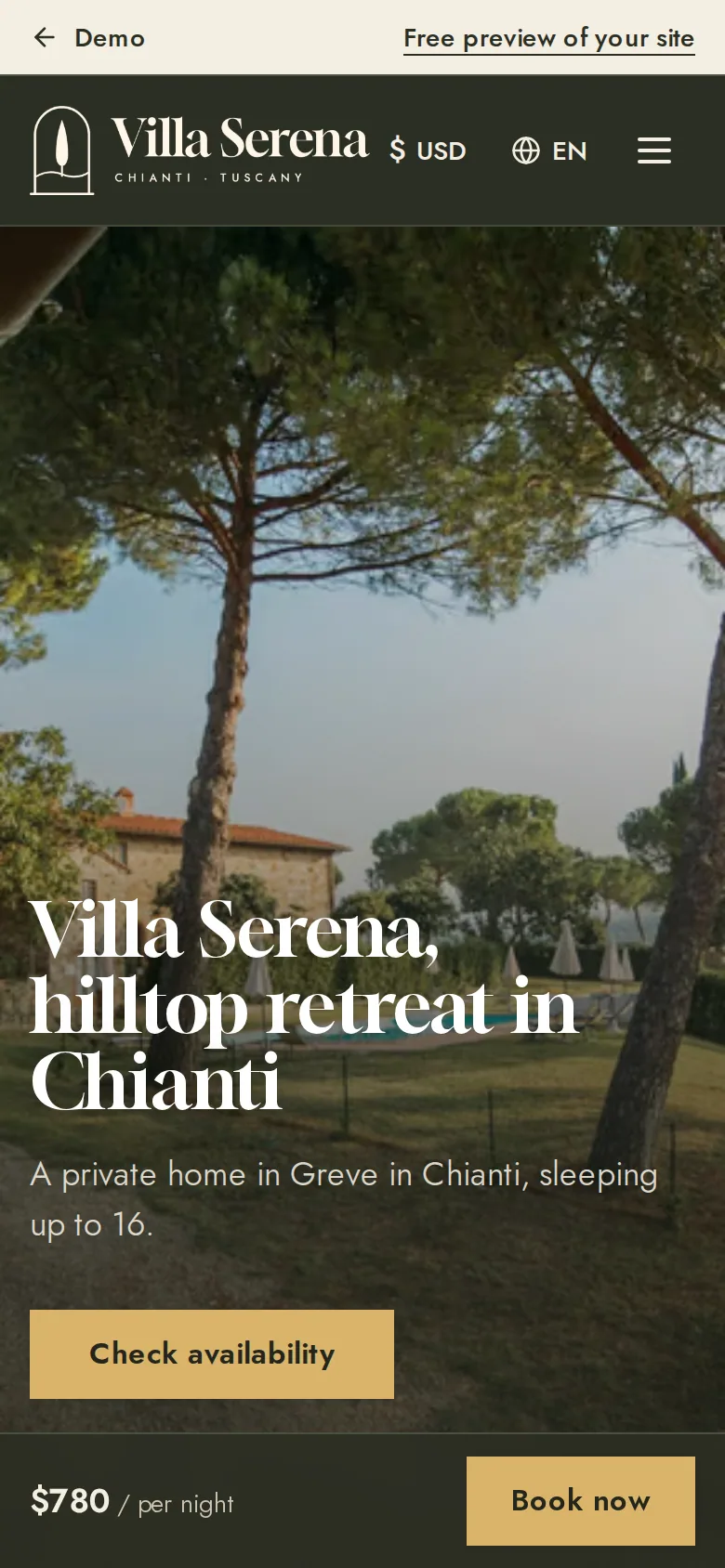
Everything a host does has to work from a phone, in plain words, in English or Italian.
Delivered sites keep their look
New styles for new customers must never change a site a customer has already approved.
Our role
All of it, from the positioning to the server: product definition, the design of the platform, of its site templates and of the marketing site, the code, the payments setup, the hosting on our own server and the customer onboarding.
What we built
One platform, many sites
Every host gets a site on its own domain, and a single deployment serves all of them. Each request is matched to its site by the custom domain first, then by subdomain, and in the demos by a path. The data lives in one Postgres database, scoped to each site by the application.
Three kinds of site, seven styles
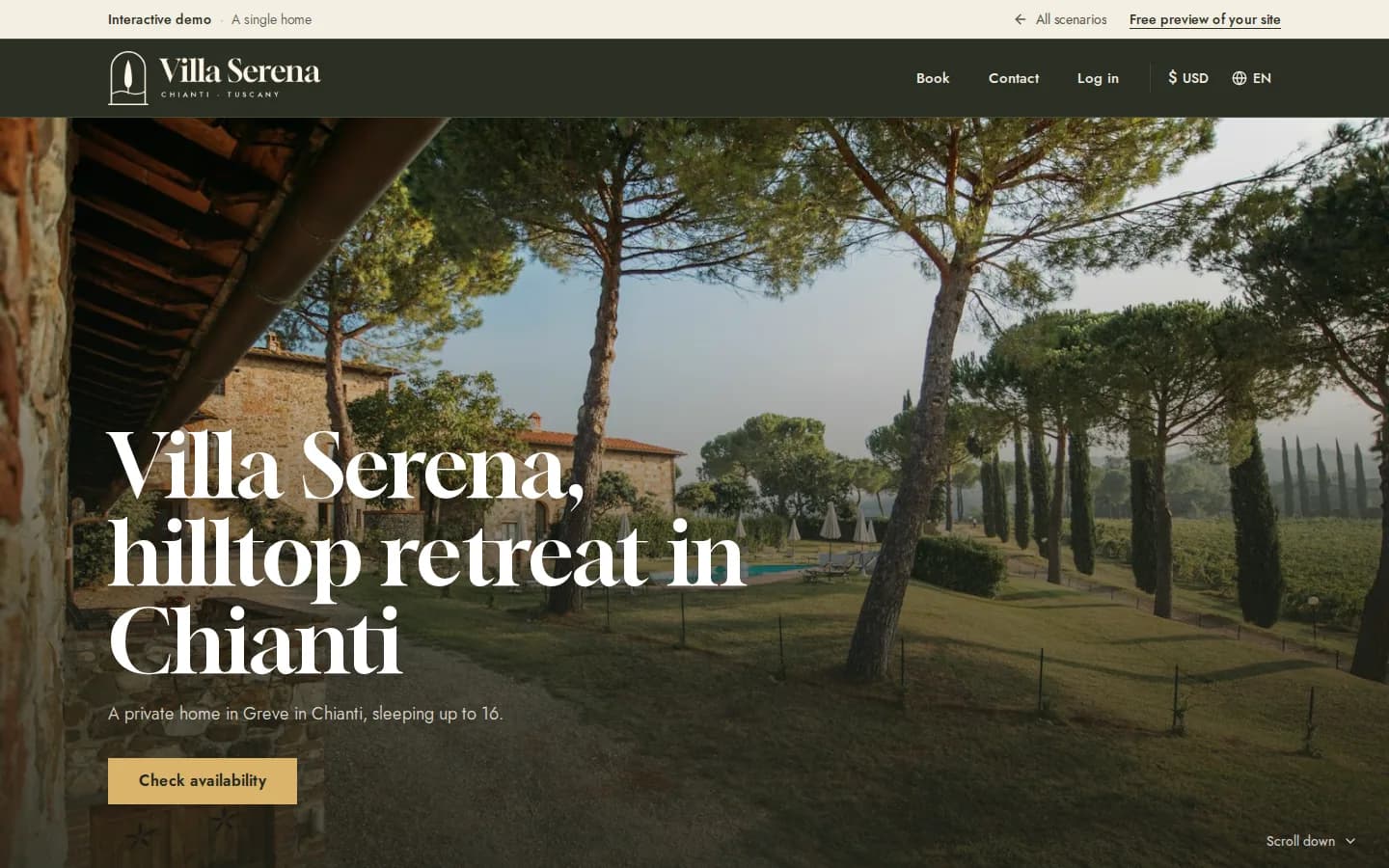
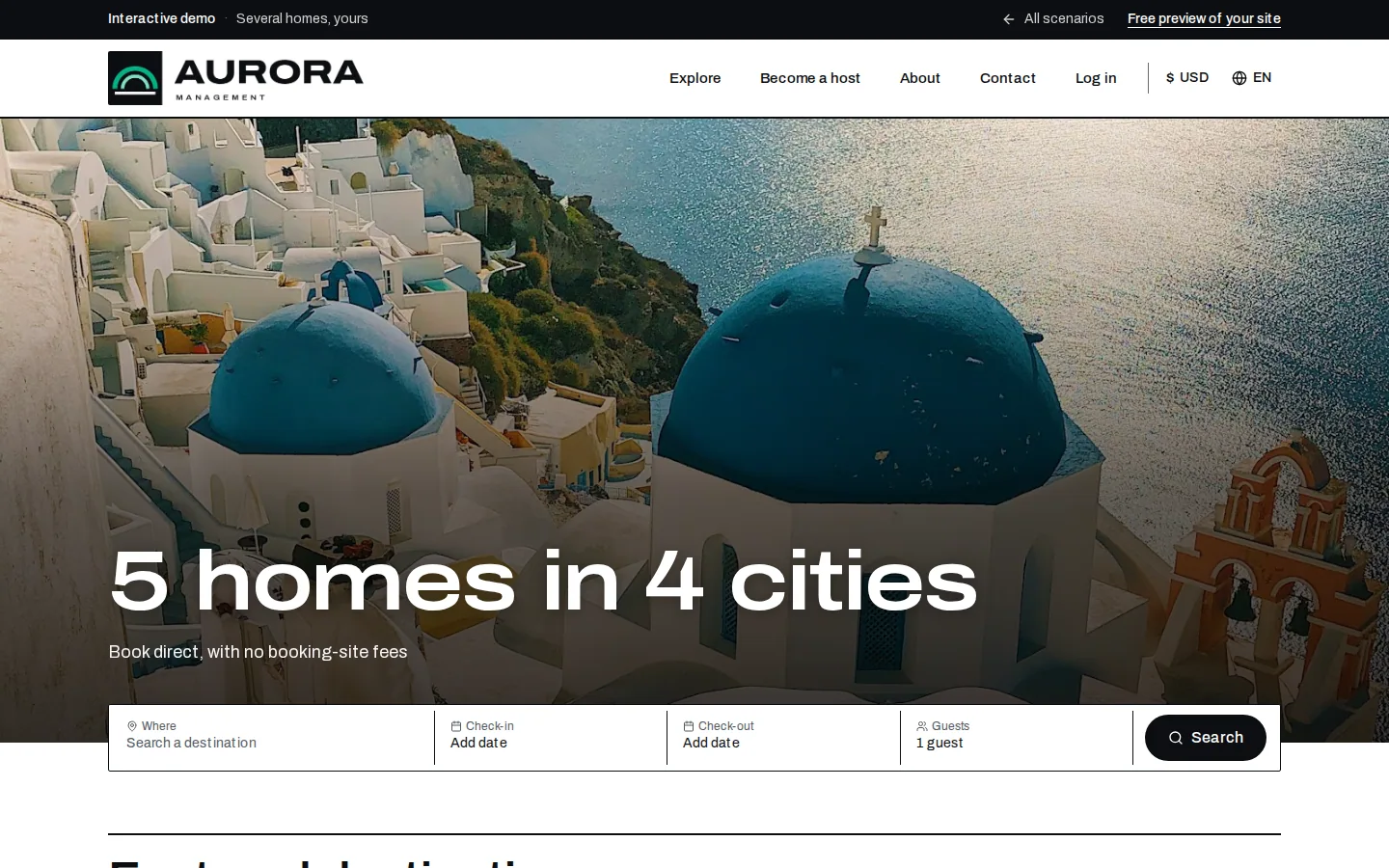
A site is a single home, a portfolio with search and a map, or a co-host site that wins new owners. Each comes with three home layouts and seven colour styles, and the default style depends on the kind of site, so two hosts on the platform don't look alike.
A calendar that cannot double-book
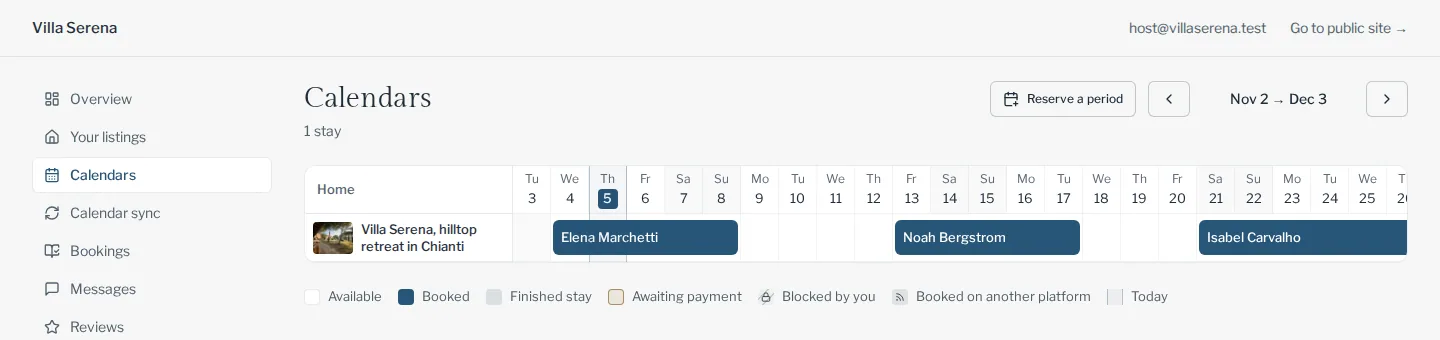
Direct bookings, nights blocked by the host and nights imported from Airbnb or VRBO calendars all go into the same table, and a database constraint refuses two stays that overlap on the same home. During checkout the dates are held for 15 minutes while the guest pays.
Payments straight to the host
Each host connects their own Stripe account, and the guest pays the host. Only Stripe's card fee applies; the platform takes nothing.
A dashboard for people who aren't technical
Overview, listings, calendars and calendar sync, bookings, messages, reviews, pricing, content and settings, in English or Italian.
From checkout to a site preview
After paying, the host fills in one form with photos, prices and the link to their Airbnb calendar. The platform creates a trial site with the home, its prices, photos, logo and calendar sync, ready to review.
What shipped
- May 2026
- First commit; the next day, the database constraint against double bookings and its integration tests
- May 2026
- Pricing engine, booking states, calendar sync, English and Italian interface
- July 2026
- Production setup on our own server
- August 2026
- Payments through Stripe Connect
- October 2026
- Automatic onboarding from checkout to a trial site
- Tests
- 43 unit and 8 integration test files, run in continuous integration with lint, type checks and a build
- Today
- Customer sites live, plus three public demos with their dashboards
- Not yet
- Smart Stay, door codes and device alerts per booking, runs in a demo only and is not offered to hosts
See it livenoeffortrentals.comThe three demos