Color Before the Lines
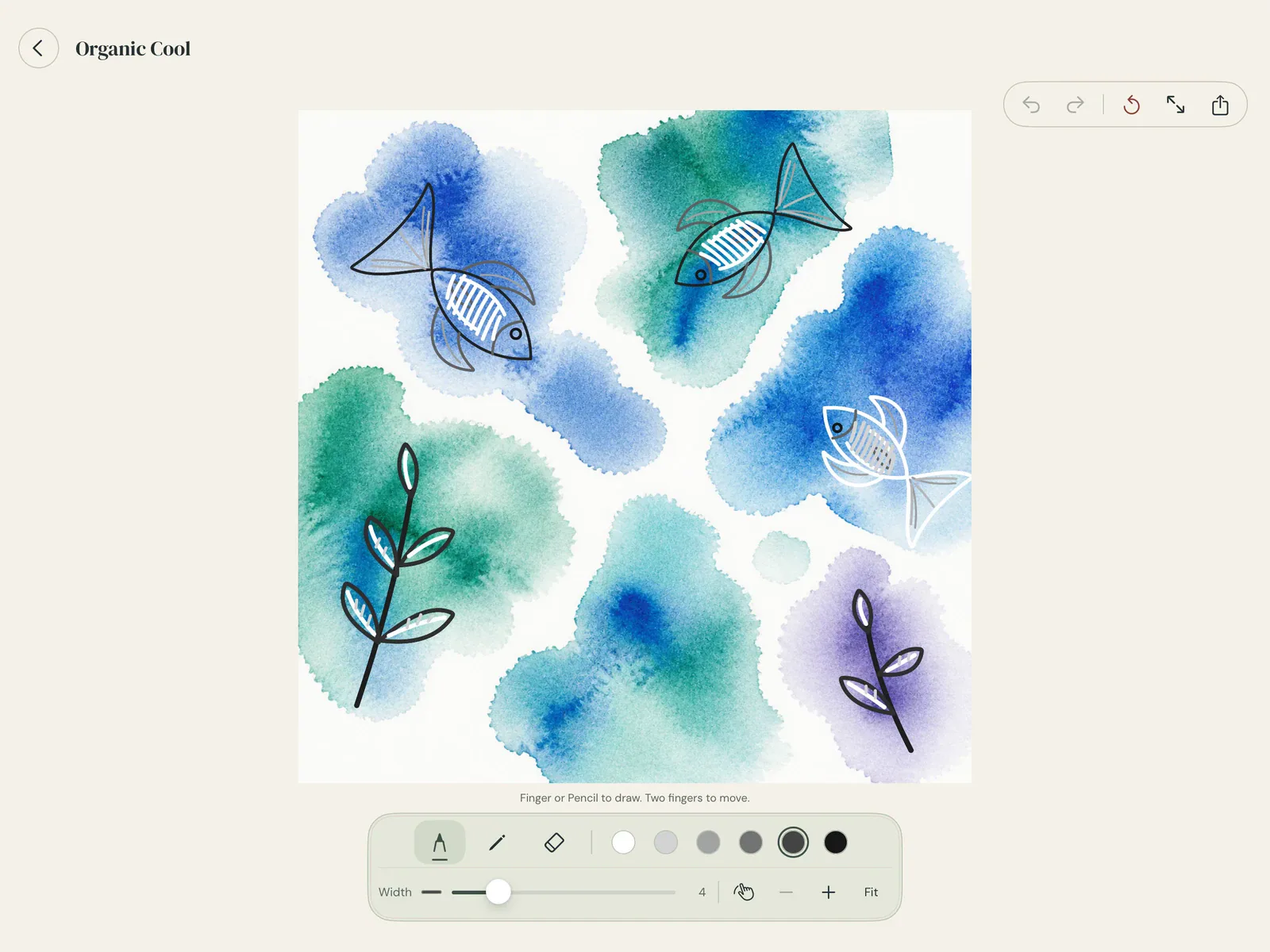
A painting app that starts from a finished watercolor. How the core interaction, the iPad and iPhone layouts and the review of our own work were designed.
Read the case study: Color Before the Lines Bytelegion
Flows, screens and design systems drawn by a designer who also writes the code, so what you approve is what gets built.
Design that survives contact with the build, because we build too.
We start from what people are trying to get done, then map every step, state and error before drawing screens.
iPhone, iPad, desktop and the sizes in between, with real content instead of placeholder text.
Colours, type, spacing and components as tokens your developers can use directly.
Clickable or coded prototypes to try with people before the build is committed.
An audit of an existing product: what blocks people, ranked by impact, with a fix for each point.
Specs come with the states, edge cases and motion developers usually have to guess.
Five steps. Each ends with something you can look at, test or build from.
The product, the people who use it and the business constraint, from interviews or analytics if they exist.
Flows and structure in wireframes, agreed before any visual work.
A visual world drawn from your product and its users, shown as real screens.
Every screen and state, on a component system with its tokens.
We answer developers' questions, review what gets built, or build it ourselves.
The design work behind our own products, from the first idea to the version on the store.
A painting app that starts from a finished watercolor. How the core interaction, the iPad and iPhone layouts and the review of our own work were designed.
Read the case study: Color Before the LinesDesign is sized by the product, not by the hour. These are the things that change the scope.
A single flow is not a whole app. We size the work by flows and screens, including their states.
Brand, research, a current product or code change where we start and how much we redo.
A few reusable components, or a full design system with its documentation.
Clickable screens are quick; a coded prototype that behaves like the app takes longer and tests better.
If we also build, the handoff is lighter. If your team builds, we add specs and review rounds.
Design can be a project on its own or the first step of an app or site we build.
Yes. We hand over specs and tokens, join reviews and answer questions while they build.
Yes. We work as UX/UI designer or design lead on agency projects, from discovery to handoff.
Tell us about the product and where it is today. We read every message and reply personally.
Or write to info@bytelegion.site